




You bought a hybrid mattress worth thousands of dollars, invested in down pillows and stocked up on chamomile tea, but you still can’t get decent shut-eye. You’re left wondering what’s wrong as you pace the halls at 3 am.
It turns out that spending more on bedroom essentials doesn’t necessarily mean you’ll wake up better rested. You’ll have to look elsewhere for answers, especially in your daily habits and bedroom setup. A cluttered space, gadgets near bedtime, and disruptive noise can make it harder for your body to get the rest it needs.
The good news is you don’t have to go bankrupt to improve your sleep quality. From cleaning your bedroom regularly to reducing distracting noises, you’ll be surprised by how effective these eight simple, practical tips are.
Deep-clean and organize your bedroom
How does a messy bedroom affect sleep? Visible clutter can increase anxiety for some people because it reminds them of things they still need to do. Your bedroom should be a calm sanctuary, not something that agitates you.
Remove unnecessary items in your bedroom. Give each item a dedicated space so they don’t end up everywhere. If you haven’t used something in a year, donate it. Store seasonal items in covered bins or vacuum-seal bags, then put them at the back of the closet. If you can’t see clutter, it’s less likely to affect you.
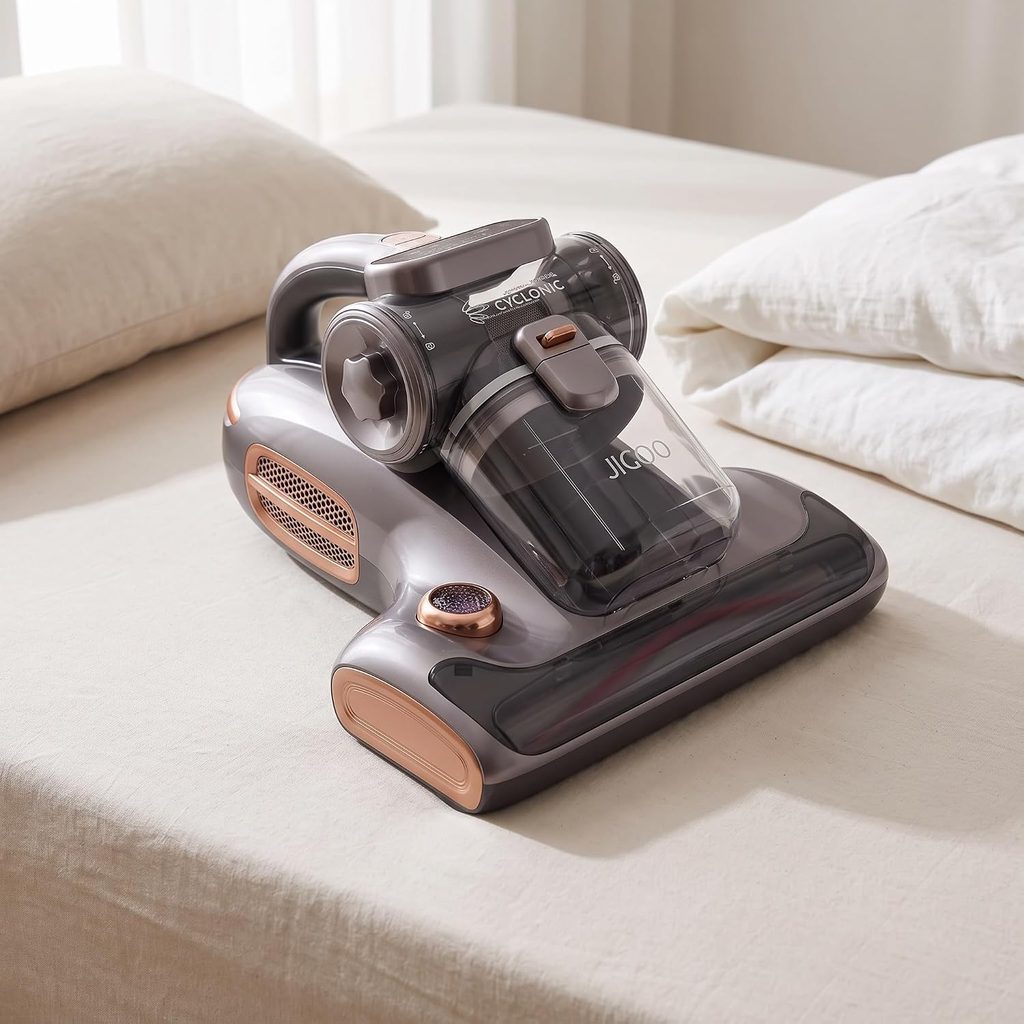
Schedule regular cleaning. Wash your bedding regularly, vacuum the floors, and give your mattress some love too. Dust, dead skin cells, and other debris can easily accumulate there. A mattress vacuum cleaner, such as the JIGOO T600, is a useful addition to your bedroom cleaning routine. It features a powerful 700W motor and a smart bed dust remover with 2 modes for a deeper clean.
Control the light coming into your bedroom
Prepare your body for sleep by dimming your bedroom lights. Light influences your body’s internal clock and melatonin production. By reducing bright light, you signal your brain to wind down and prepare for rest.
If outside light is an issue, consider blackout curtains and sleep masks. Some high-quality blackout curtains do more than block light; they also dampen ambient noise and insulate your room.
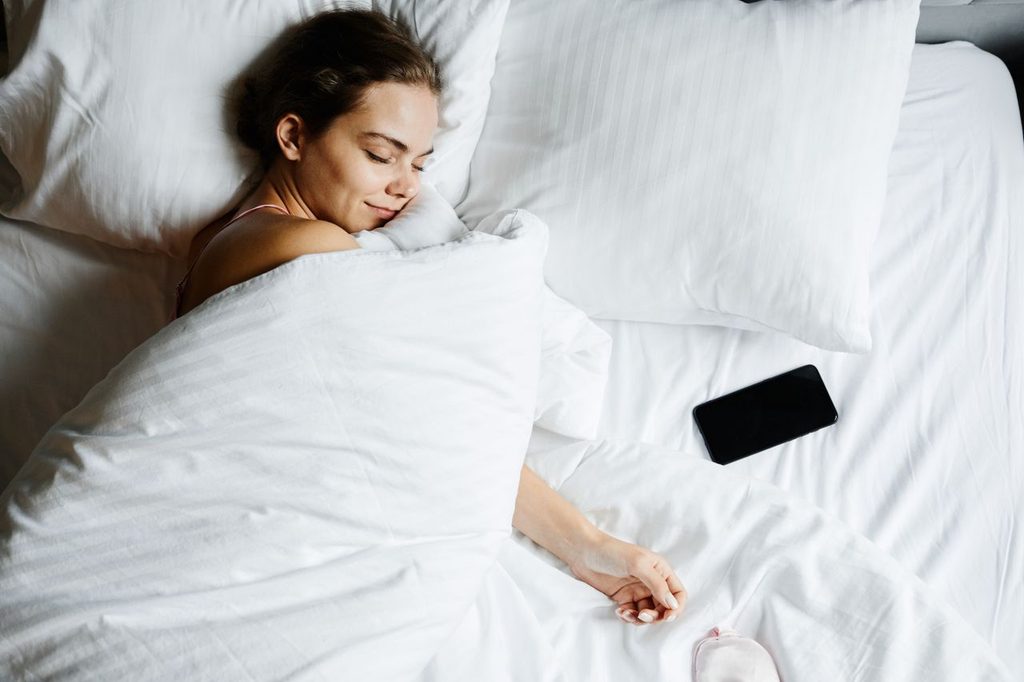
It’s also helpful to put electronic devices away at least 30 minutes before bedtime. If you tend to scroll mindlessly, put the phone on your bedside table with the screen facing down. You can also enable Sleep or Do Not Disturb mode to reduce the temptation to pick it up and doomscroll late into the night.
Reduce distracting noise
Noise can make it difficult to fall asleep and stay asleep. A well-known sleep medicine physician strongly believes quiet spaces improve sleep. Before prescribing medications, he asks for a detailed description of the sleep environment and what creates the disruptive noise.
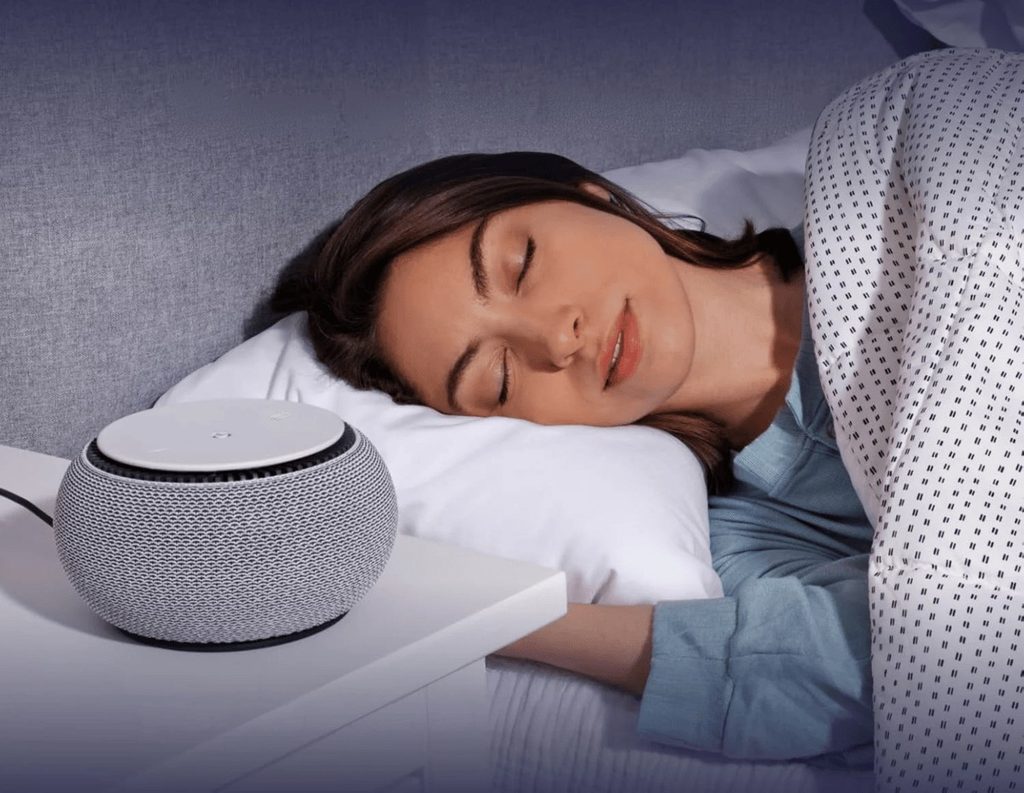
You may not be able to retreat to a completely noise-free bedroom, but you can add consistent background sound to drown out noise that you can’t control and distract you from anxious thoughts. If you are anything like us, neighborhood noise is a big issue, and the SNOOZ Original Smart White Noise Sound Machine is worth a look. It uses a real fan to produce natural, non-looping white noise that helps mask surrounding sound. We personally cannot sleep without the background hum.
Keep your bedroom at a comfortable temperature
Your body’s temperature naturally drops as you fall asleep. Setting your bedroom temperature between 65 and 68°F can help support the process. If you’ve ever woken up in the middle of the night because it’s suddenly too hot, it might be time to make some changes.
Beyond adjusting the fan or air conditioning in your bedroom, switch to lightweight bedding and sleepwear made from natural, breathable fabrics, so you don’t bake in bed at night, especially if, like many of us, you share your bed with a partner and a couple of animals.
Get the right bed, mattress, and pillows
One of life’s most important decisions is choosing the best mattress for sleep. You can’t put a price on the right support and comfort, and we’re not saying you need to get the most expensive type or the most advanced features. The ‘right’ mattress depends on many things, including your sleep position, weight, preferred firmness, whether you tend to run ‘hot’ when sleeping, and whether you share the bed with someone else.
There are several types of mattresses on the market, and some of the most popular are foam, innerspring, hybrid, and latex. Each has pros and cons, so you’ll need to research thoroughly to find one that suits your needs.
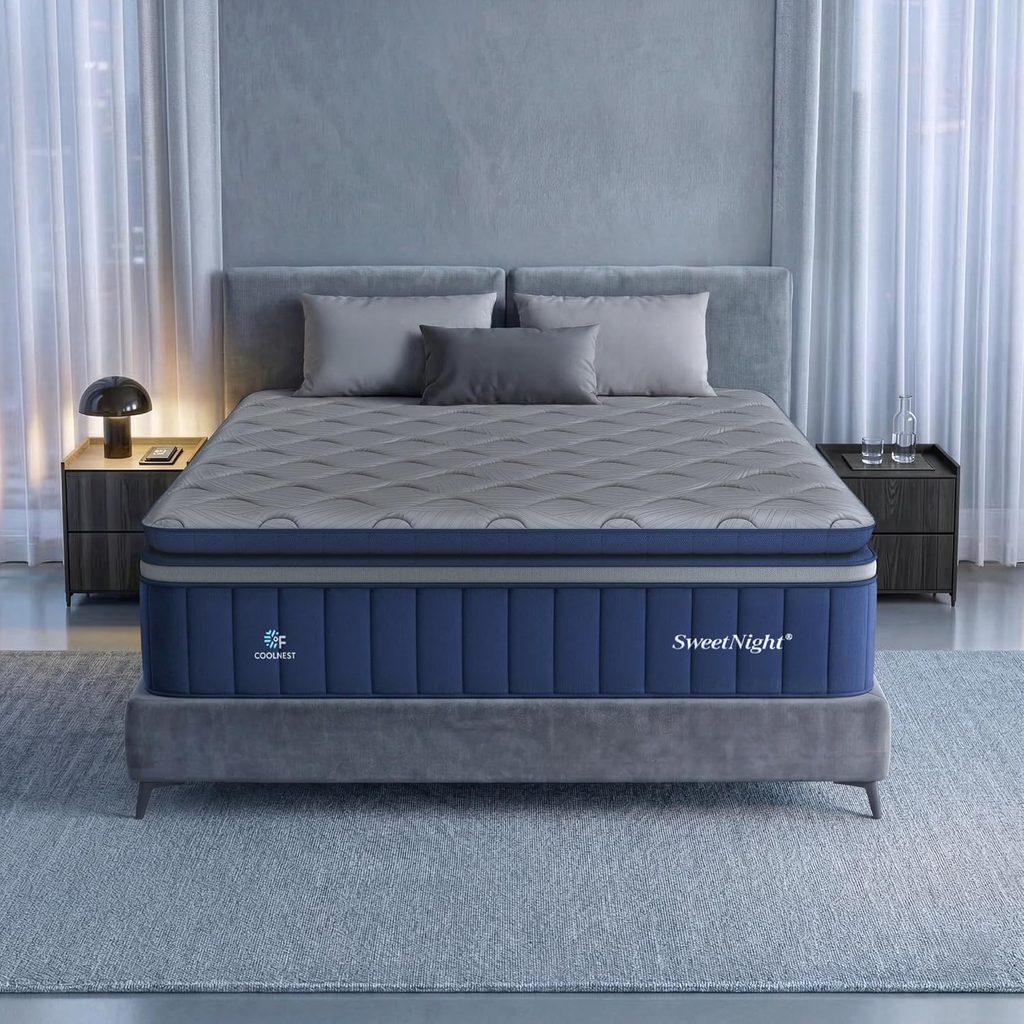
If you sleep hot, consider cooling mattresses for hot sleepers. The Sweetnight CoolNest Hybrid mattress is a cooling mattress that features CertiPUR-US certified foam and an OEKO-TEX cover for a hypoallergenic, fiberglass-free sleep environment.
The pillow’s primary goal is to keep your head, neck, and spine in neutral, straight alignment. Like mattresses, the ‘right’ pillow varies from person to person. Match it to your sleep position, and consider fill materials such as down and feather, latex, memory foam, and adjustable fills.
Lastly, there’s the bed frame. Although it is arguably less important than the mattress and pillows, it still has to provide stability and have the right height.
Stick to a sleeping schedule
A consistent sleep schedule trains your body when to lower your core temperature and release sleep-inducing hormones, helping you feel tired as your set bedtime approaches. Your brain anticipates rest, so you’re less likely to stay awake all night.
A bedtime routine, a set of activities done in the same order at least 30 minutes to an hour before bed, can build a foundation for sufficient rest. For some, it’s a long, relaxing bath; for others, it’s drinking chamomile tea, journaling, or meditating.
Be mindful of what you eat and drink
Do food and drinks influence sleep? Absolutely! Eating large, heavy meals right before bedtime can cause indigestion or discomfort, so eat dinner a few hours before bed and keep portions small.
Be careful with caffeine close to bedtime because it keeps you awake by blocking adenosine, a sleep-inducing chemical. If you have anxiety or insomnia, it’s best to reduce your daily caffeine intake. According to The Sleep Foundation, avoiding caffeine at least 8 hours before bedtime can promote better sleep.
Get up and move
Regular physical activity improves health, reduces stress and anxiety, and improves sleep. In fact, there has been a growing interest in using physical activity as a treatment approach for sleep disorders.
So, what is the best time to exercise for better sleep? According to The Sleep Foundation, no single time of day is best for exercise, but to reinforce an earlier sleep schedule, try exercising in the morning or afternoon. Evening exercise is generally fine for most people, but vigorous workouts close to bedtime may over-excite you, making it hard to fall asleep.

Your Path to Better Sleep Starts Here
Generally, you don’t need medications or fancy retreats to sleep better at night. Often, the smallest changes have the greatest impact. Look at your bedroom and start organizing and removing clutter. If your mattress has always been uncomfortable, replace it with a better one.
Practicing healthy habits is also beneficial. A consistent sleep schedule, mindful eating, and physical activity can support better sleep over time. Make the necessary changes and adjust your routines as needed.
If you continue to struggle to fall asleep, have fragmented sleep, or still wake up tired after 8 hours of sleep, see a healthcare professional. Persistent sleep issues may have additional causes that require more than a change in your bedtime routine.